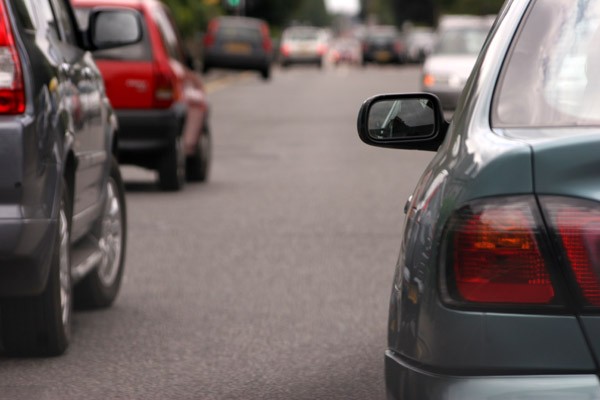
It’s been a sad cultural joke that Californians are addicted to cars, but nowhere so much as in Southern California.
For decades, all that we Bay Area drivers had to do to feel smug was compare ourselves to those car-crazy L.A. types, and instantly our guilt was wiped away like so many bug-splats from a windshield. But not so anymore. Unless the Bay Area can get its act together on a transportation plan, Los Angeles may leave us in the dust when it comes to workable transportation.
“There’s a very real possibility in the next 10 years that Los Angeles may become California’s number one transit city,” says Graham Brownstein of TransForm, a Bay Area advocacy group that now works statewide to promote sustainable transportation reforms. “L.A. is building a transit system that will allow passengers to go from downtown to Santa Monica,” explains Brownstein. “They’ve taxed themselves and are raising billions to invest in alternative transportation.”
Figuring out how to pay for solutions is at the core of all transportation efforts. According to Brownstein, all areas of the country have grossly underfunded their transportation systems by neglecting funds for long-term maintenance. “California keeps funding new roads—digging the hole deeper—without maintaining the ones we have,” says Brownstein, explaining that his agency, in the course of helping to secure billions of dollars for transit, bike and pedestrian investments, has found that transit improvements benefit communities, including government infrastructure costs.
“There are also tremendous cost savings to households, particularly those at the lower end of the income scale,” says Brownstein. “Households close to good transit save about $5,500 a year as opposed to households with lousy transportation access.” Housing and transportation account for 40 percent of the state’s greenhouse gas emissions.
Adding transit lines to new areas can undermine the system if there is not funding to maintain those new lines. The same holds true for new roads. An assessment undertaken by the California Transportation Commission and the California Transit Association—with help from those who do modeling and assessment—has shown that our needs are staggeringly high, topping hundreds of billions over the next decade alone.
TransForm wants to exclude new roads, cutting the number to about 350 billion. “It’s beyond any single sector need by a factor of 10 at least,” Brownstein explains. “It’s almost impossible to get your head around.” The rub is that much of the need is deferred maintenance. When you wait too long to repair, you have to rebuild, which is much more costly.
Can California create a workable alternative to our car addiction? “It’s a five-to-10-year process,” says Brownstein. “But I’m cautiously optimistic.”
For more information, see www.transformca.org.